
Evolving Social Media: Part 2
"(Blue) Check, Please!"

Time to leave the big apps?
I think there is a tremendous opportunity right now for decentralized social media to take a major step towards mass adoption.
To clarify, I’m not pitching the “metaverse” here - this isn’t about decentralized social platforms in the form of games or 3D virtual spaces. Instead, I’m focused on the future of large-scale content sharing (text/photo/video) + messaging (direct, group), and the potential for new platforms to take off.
What will be the next Twitter, the next Instagram, the next TikTok?

Social media is at a major inflection point: concerns about privacy, safety, security, freedom of speech/content moderation, and mental health impact are pressuring the big platforms to undergo large-scale surgeries.
But will they? It feels like Twitter, Instagram, Facebook, TikTok can kind of do whatever they want. I think it’s inevitable that these platforms will continue to evolve in whatever way serves their own interests.
One recent development has opened the doors - fairly wide in my view - for more competition. It’s the introduction of subscription services.
I imagine I’m not the only one seeing that so many apps have recently announced membership or subscription services.1 It’s happening all over.
The reasoning: I understand that subscriptions offer an additional revenue stream and can really drive lifecycle marketing. Subscriptions have been shown to increase customer purchases,2 and existing subscription brands grew their overall customer base by 31% in 2021 alone.3
In my view, however, the recent announcements of social media subscriptions, Meta Verified and Twitter Blue, seem to make “big tech” even bigger, further strengthening their grip over our digital experiences.

Twitter Blue:
“Twitter Blue is an opt-in, paid monthly subscription that adds a blue checkmark to your account and offers early access to select new features, like Edit Tweet.”
$8.00 per month for the web or $11.00 (USD) per month for iOS.
Meta Verified:
“Meta Verified, a subscription bundle on Instagram and Facebook that includes a verified badge and access to account support.”
$11.99 (USD) a month on the web, and $14.99 (USD) a month on iOS and Android systems.
“The main benefit of the pay-for-subscription model across these social media apps has been strategically portrayed by the companies behind them as verification and authentication of users to alleviate concerns over bots and disinformation.”4
My issue: These companies have already profited billions off of “free” users by selling personal data to third parties. The notion for users to now PAY a platform for a “verified presence” while it continues going off and monetizing their data is just absurd.
I think it’s an exceedingly bold move. Already, platforms take advantage of users who sacrifice so much autonomy and privacy when blindly acknowledging convoluted privacy policies upon sign up. To now pay for a subscription experience that isn’t “Ad Free” or allow an opt-out from data collection feels exploitative and even dystopian.
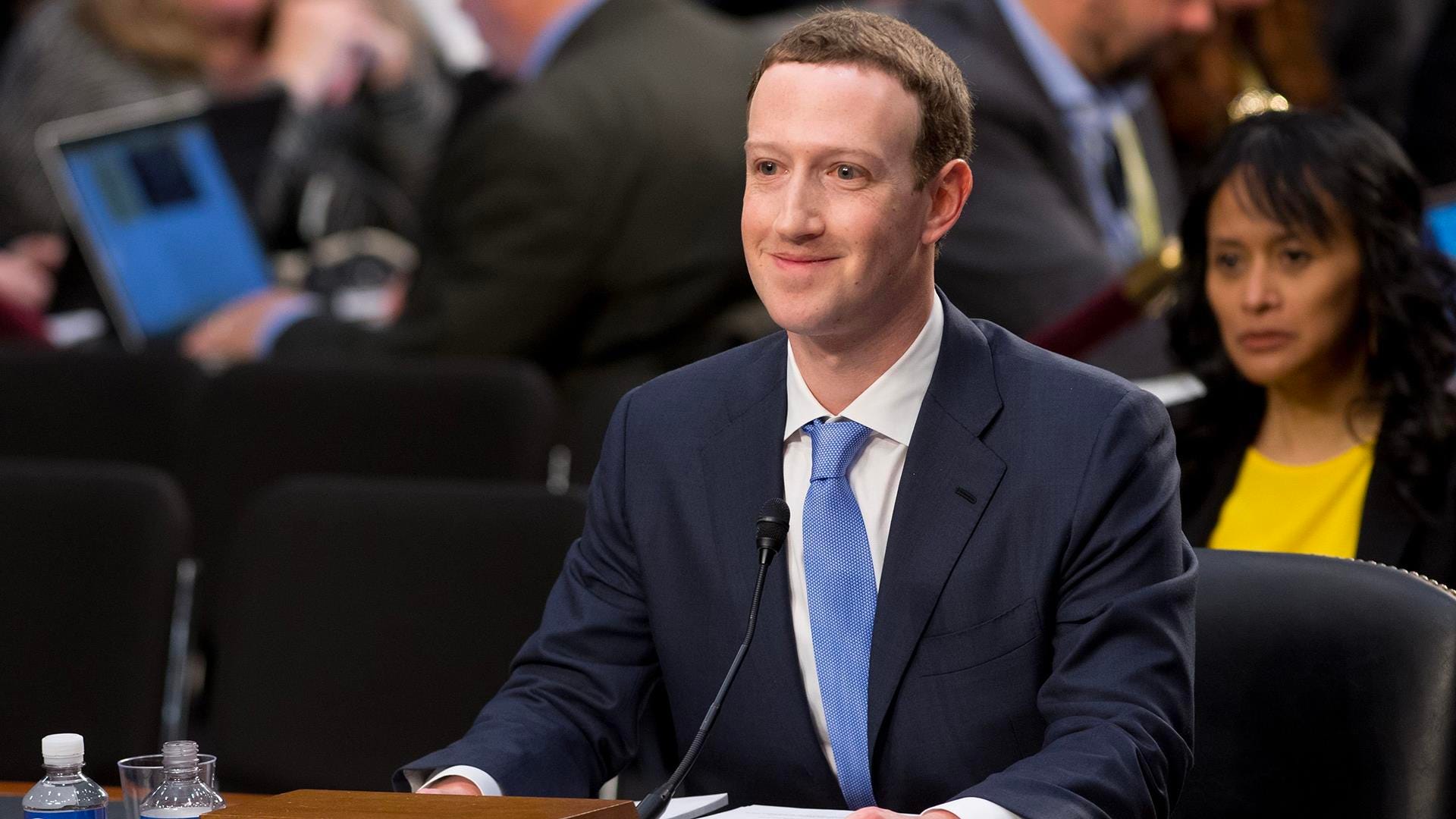
Now I’m not pretending to have the business acumen to discredit the top decision makers at Meta (> $500b Mkt cap) or Twitter (> $40b Mkt cap). The subscription launches are probably good moves for their businesses. Notwithstanding, I think the move weakens their brands, and furthermore, gives decentralized platforms an opportunity to compete, steal market share, and prove that they are the better, fairer, more ethical, and more affordable alternative.
Following the subscription announcement, “searches for ‘deactivate Facebook’ and ‘deactivate Instagram’ are up by 1,900% and 1,566%, respectively, per data from VPNOverview.com.”5
Here are my views on the present opportunity…
Average revenue per user (ARPU) PRIOR to subscription models:
- Twitter makes approx. $60/yr ($5/mo) off each user in the US
- Instagram (Meta) makes approx. $200/yr ($16/mo) off each user in the US
Source: Insider Intelligence
For those who opt-in to Twitter Blue and Meta Verified, estimated revenue per US user would be:
- Twitter Blue ($8/mo) + $5/mo estimated ad revenue = $13/mo or $156/yr
- Meta Verified ($14.99/mo) + $16/mo estimated ad revenue = $31/mo or $372/yr
The introduction of subscription models would approximately double the ARPU on those who opt-in.
I believe we will need to wait and see how subscription adoption plays out on Twitter and Meta in order to make a fair assessment on consumer preferences. Are we (users) willing to pay for verification (essentially a “status symbol” in this case)? Are we willing to pay for privacy? Or are we not willing to pay at all?
My guess is that most users will still expect social media to be “free” and for it to remain that way.
Panda, a cybersecurity firm, concluded the following from a study of 1000 Americans:
80% of Americans say they value their data privacy more than keeping social media platforms free to use
Conversely, 72% aren’t willing to pay to protect their privacy
It’s a bit vague... Where do you stand? Would you pay ~$5/mo for a privacy-friendly, ad-free Twitter or ~$15/mo for a privacy-friendly, ad-free Instagram?
I think if consumer preferences truly signal that users want privacy while keeping platforms free to use then this strongly validates the case for decentralized social networks.
This would be a huge power shift (ie. Web3), as no third party could own, collect, or sell user data.
Users would be in control of their own data and privacy within a decentralized network that is inherently more secure.
Meanwhile, there is still room for monetization. The transactions would alternatively be between you and me, not the platform and the data broker. Followers could make direct purchases from artists, businesses, or creators.
There are even tools, like Diamond, that support moderation by scanning/filtering blockchains to prevent showing content that is harmful or illegal.
Opt-in or opt-out? Are we ready to move on from the big platforms? Can privacy-friendly platforms compete? Can they prevail? Let me know your thoughts.
Some notable decentralized social projects:
Suggested reading:
“Research: How People Feel About Paying for Social Media” by G. Tomas M. Hult and Forrest V. Morgeson in Harvard Business Review
“Paying for Privacy and the Personal Data Economy” by Stacy-Ann Elvy in Columbia Law Review
“The world’s most valuable resource is no longer oil, but data” in The Economist
Additional:
The blue check has come to symbolize trust. In “Evolving Social Media: Part 3,” I will explore our struggle to trust what we see online and highlight approaches to expand content authenticity + establish media provenance.
To assess privacy on your favorite apps, check out Mozilla’s *privacy not included project.
If you logged onto Facebook at some point in the past 16 years, you're probably eligible for part of a $725 million settlement Meta has agreed to in order to settle privacy violation allegations.